Online Tajweed Course for Kids: Teaching Correct Recitation Simply
An online tajweed course for kids teaches children to pronounce the Quran correctly, one small rule at a time. It is made for children who can already read Arabic letters. If your child is still learning the letters, begin with the Noorani Qaida course. If you want Arabic as a language, see our online Arabic classes for kids.
Why Tajweed Is Taught Differently to Children
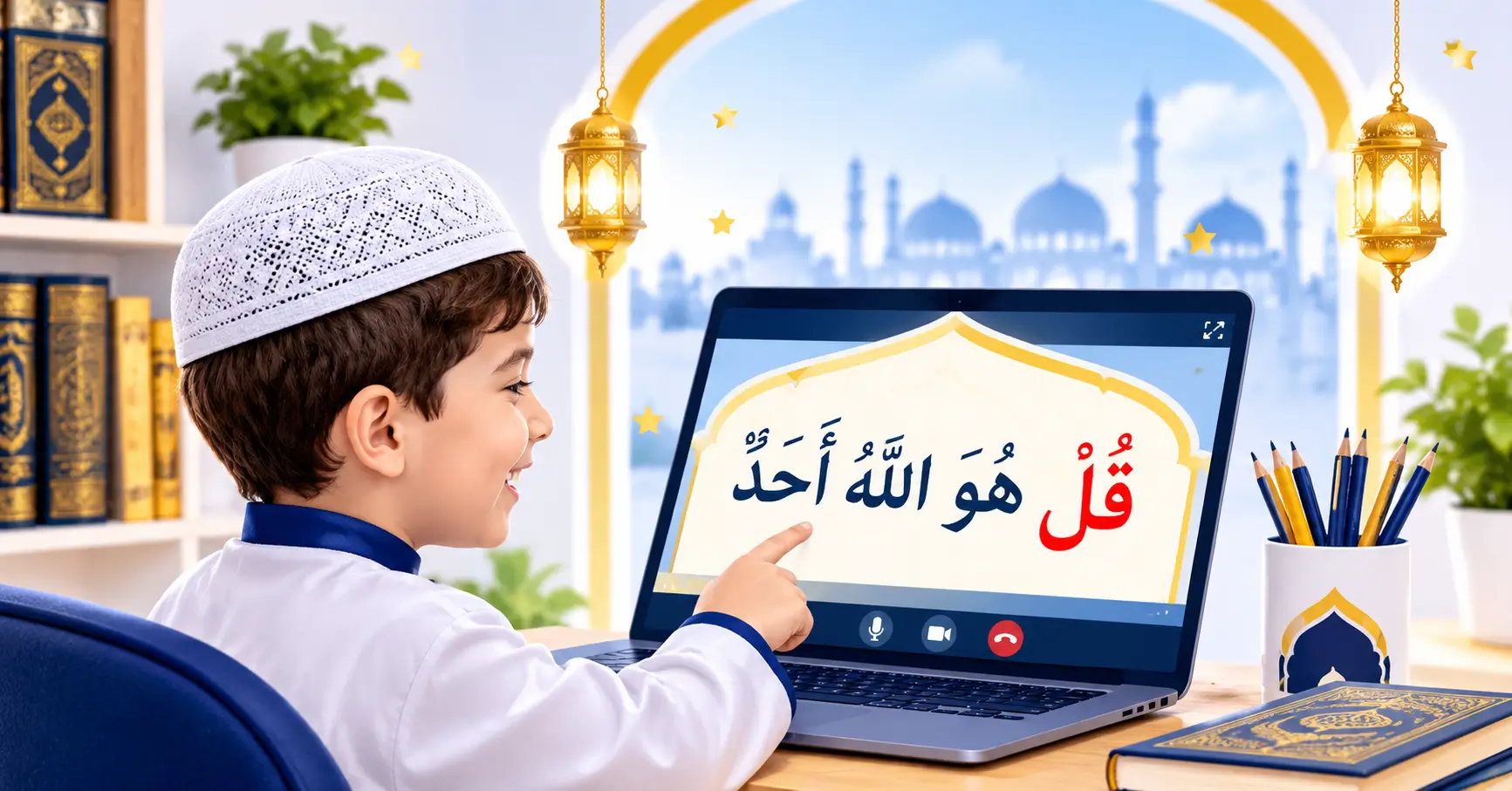
Children learn sounds best by listening, repeating and being corrected gently. For that reason, rules are not given as long definitions. The teacher models the sound, the child copies it, and the rule is named once the child can hear it. One rule at a time keeps the lesson light and avoids overwhelming a young learner.
What Your Child Will Practice
- Producing each letter from the right place by listening and repeating.
- Telling heavy letters from light ones.
- Holding long sounds, called madd, for the right length.
- Noon sakinah and tanween, introduced gradually.
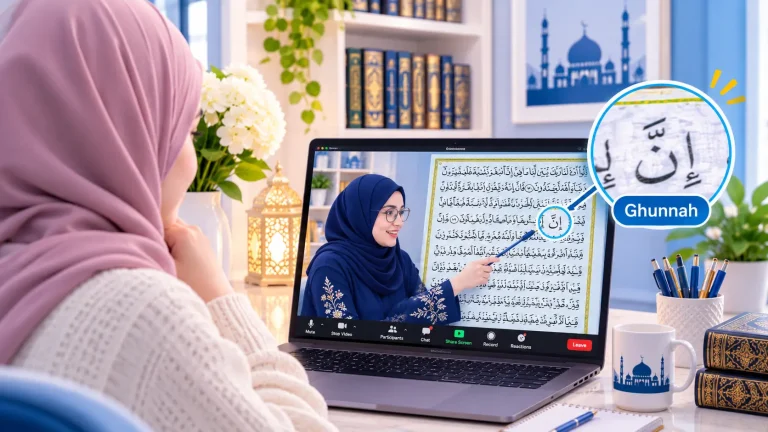
- The nasal sound of ghunnah and the gentle echo of qalqalah.
- Reciting short passages with the rules applied.
How a One-to-One Lesson Helps a Child
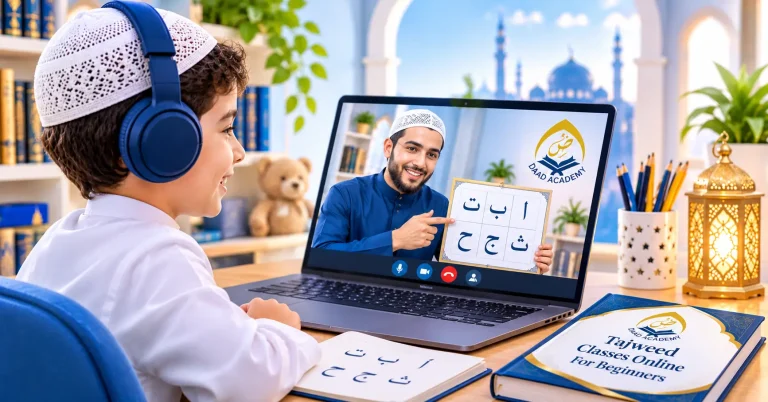
In a one-to-one lesson, the teacher hears every sound your child makes and corrects it straight away. There is no group to hide in and no audience to feel nervous in front of, so a child can try, make a mistake and try again. Lessons are given in Arabic and English by native Arabic-speaking teachers who are graduates of Al-Azhar University, which helps children understand each new word and rule.
When Is a Child Ready for Tajweed?
A child is ready when they can read Arabic letters and short words without spelling out every letter. Readiness depends on the child, not only on age. Some children are ready sooner because they already read fluently, and others need more time with reading first. If you are unsure, a free trial session lets the teacher hear your child read.
The Parent’s Role
You do not need to know Tajweed to help your child. A few simple habits make a real difference:
- Sit nearby in the first lessons, then step back as your child gains confidence.
- Make sure the device and a quiet place are ready before each lesson.
- Ask your child to recite a few lines each day.
- Praise effort and patience instead of speed.
A parent or another adult should be at home during every lesson.
Keeping Tajweed Gentle
The Quran describes itself as made easy for remembrance (Surah Al-Qamar, 54:17). A kind, steady approach to Tajweed helps children feel that ease instead of pressure. If your child feels corrected too often, tell the teacher so the pace can slow down.
Where This Course Fits
Reading comes first, Tajweed comes next, and then recitation and memorization can build on both. If you would like to see the full order in which the rules are taught, read about our tajweed classes online for beginners.
What Comes After This Course
Once your child recites with the rules in place, they can continue with online Quran classes for kids, or begin memorization with the Hifz Quran course for kids. A steady Tajweed base helps a child memorize accurately.
Start With a Free Trial
A free trial session lets your child meet the teacher and try a real lesson before you decide. Book a free trial session for the online tajweed course for kids and see where your child will begin.