Online Quran Classes for Kids: What Parents Should Know
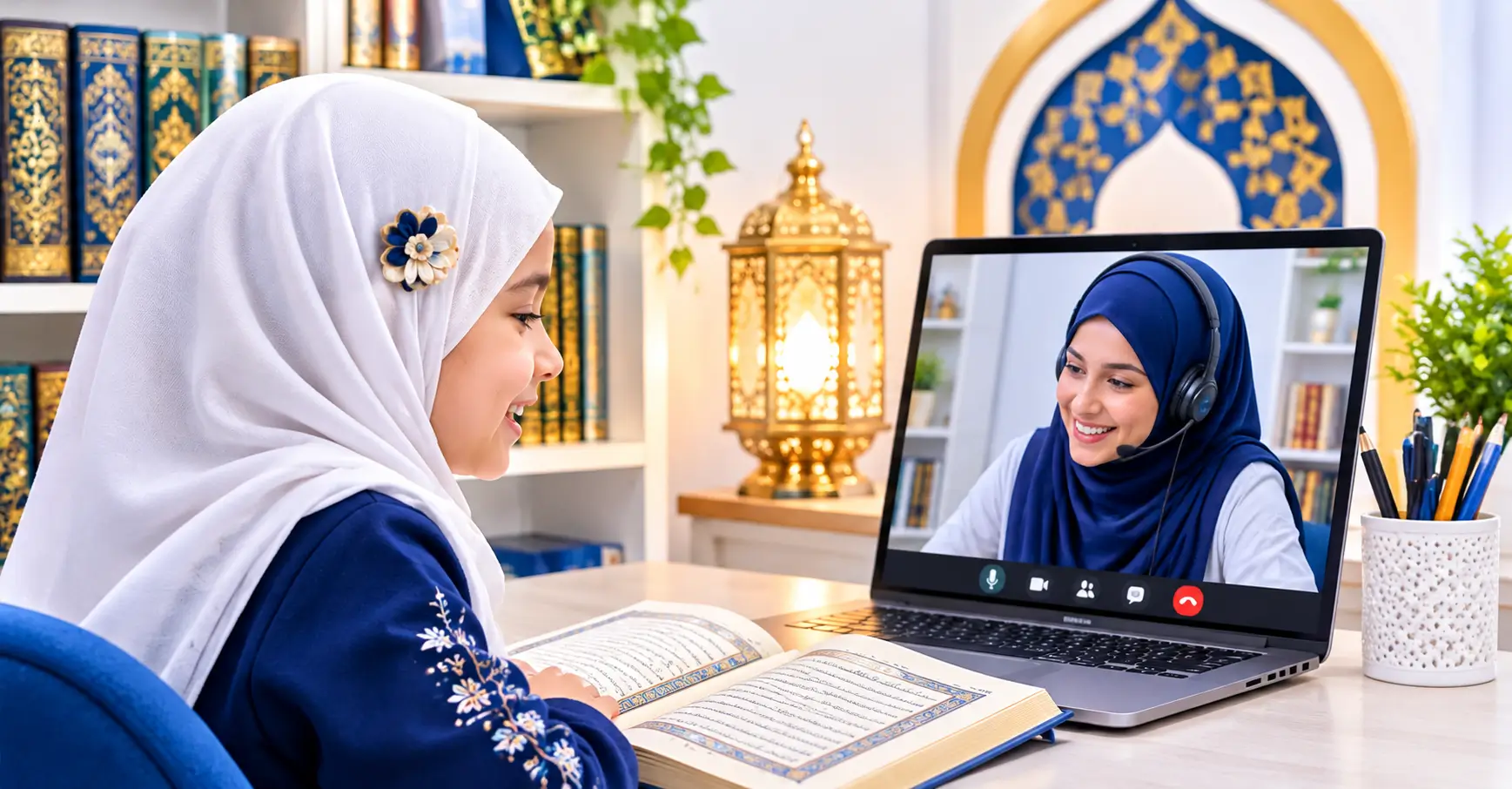
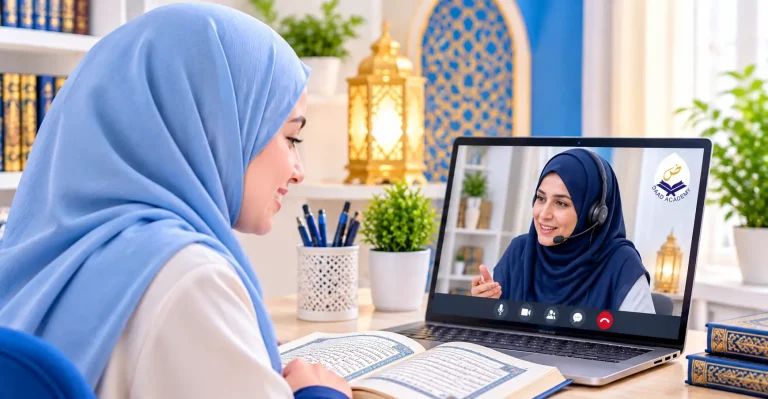
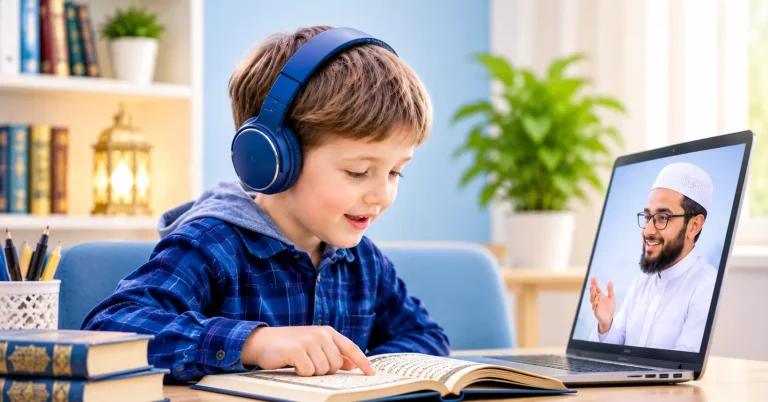
Online Quran classes for kids at Daad Academy are live, one-to-one lessons in which a child learns to read the Quran with a teacher who listens to every word. Lessons are taught in Arabic and English by native Arabic-speaking teachers who graduated from Al-Azhar University. This page answers the questions parents ask most: what the lessons cover, whether your child is ready, and how to support them at home.
What Do Online Quran Classes for Kids Cover?
The course focuses on reading the Quran correctly and steadily. A child revises the letters and vowel marks, then moves on to words, short verses and short surahs, always reading aloud so the teacher can hear each sound. As reading becomes steady, children meet the first ideas of careful recitation. The aim is a calm, confident reader, not a fast one.
Is Your Child Ready?
The course assumes your child can read Arabic letters. Here is how to check where you stand:
- Your child can read Arabic letters, even slowly: you are ready to book a free trial.
- Your child has never seen Arabic letters and you want them to read the Quran: start with the Noorani Qaida course, the first step of Quran reading. If you would like to understand that first book before you begin, read our guide to what Noorani Qaida is.
- Your child has no Arabic and you want the language: see online Arabic classes for kids.
Why One-to-One Lessons Help Children
Many children feel shy when they read aloud in front of others. In a private lesson there is no audience, so a child can read slowly, repeat a word and ask a question without worrying about how it sounds. The teacher hears every sound and can spend time on the point that needs it. A child who is ready to move on is not held back, and a child who needs more time gets it.
How a Lesson Can Look
A typical lesson may begin by reviewing the last reading, then move to a new passage read aloud together, and end with a short plan for practice at home. Many children also enjoy listening to short surahs, such as Surah Al-Ikhlas, while they follow the words. Explanations are given in English or Arabic, depending on what helps your child most.
Be Patient With the Pace
Every child learns at a different speed, and reading the Quran well takes time. Some children grow in confidence quickly, while others need more repetition on a letter or a vowel. That is normal. Encouragement matters more than comparison, and a relaxed child usually reads better than a pressured one.
How Parents Can Help at Home
- Choose a short, fixed time for Quran reading each day.
- Ask your child to read one short passage aloud after each lesson.
- Praise clear reading and effort, not speed.
- Keep a quiet place and put screens away during reading time.
Reading First, Then Tajweed or Hifz
Steady reading is the foundation for everything that follows. When your child reads confidently, you can add our online Tajweed course for kids to study the rules of recitation, or the Hifz Quran course for kids to begin memorisation. Each course is separate, so your child can take the next step when they are ready.
Learning Islam Alongside the Quran
Many families add lessons on the basics of faith. Our online Islamic classes for kids can sit alongside Quran reading, so your child learns the meaning of what they practise.
Looking for Lessons for Yourself?
This page is for children. If you are an adult who wants to read the Quran, see our online Quran classes for adults.
Start With a Free Trial
A free trial session lets your child meet the teacher, read a few lines aloud and try a real lesson before you decide. Book a free trial session for online Quran classes for kids and see where your child will begin.