✓ 1-on-1 Live Online Sessions
✓ Male & Female Certified Tutors
✓ 100% Free Trial Included
Need assistance? WhatsApp: +20 123 456 7890
Daad Academy
Nahw and Sarf Classical Arabic Grammar 1-on-1 Live Online

Arabic Grammar Course

The Arabic grammar course at Daad Academy teaches Nahw (how sentences are built) and Sarf (how words are formed) in live one-to-one lessons with a native Arabic-speaking Al-Azhar graduate teacher. It is for learners who can already read Arabic and want to understand why the language works as it does. Lessons are in Arabic and English. Book a free trial session to meet your teacher first.
Nahw + Sarf Syntax and Morphology
1-on-1 Live Online Lessons
Madinah Arabic Core Textbook Series
Free Trial Meet the Teacher First
Admissions Open 24/7
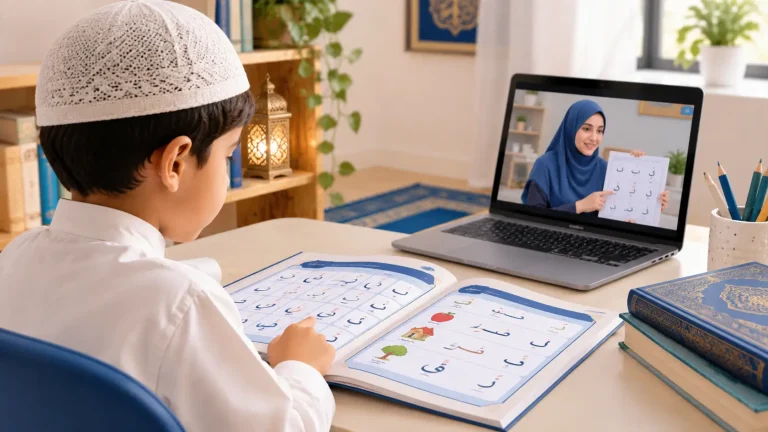
"Arabic grammar course: student learning Nahw and Sarf in a live one-to-one lesson with a Daad Academy teacher"

Ready to start your journey?

Book Your FREE Trial Session

Arabic Grammar Course: Course Overview

LevelFor learners who can already read Arabic letters
FormatOne-to-one, live online
Arabic typeClassical Arabic, the language of the Quran
FocusWords, roots, grammar and reading verses
TextbooksMadinah Arabic series, with Daad Academy vocabulary workbooks
Session length45 to 60 minutes
LanguageArabic and English
TeachersNative Arabic-speaking Al-Azhar graduates

Who Should Study Arabic Grammar

Learners Stuck After the Basics

You can read simple Arabic, but sentences still feel like guesswork.

Quran Learners

You want a solid grammar base before studying Quranic Arabic.

Islamic Studies Students

You want to read classical texts in the original Arabic.

Teachers Who Want a Stronger Base

You teach or tutor Arabic and want to deepen your own grammar.

Nahw and Sarf, Block by Block

UNIT 01

Nahw Block 1: The Two Sentence Types

▼
Nominal and verbal sentences, definite and indefinite nouns, and how adjectives agree with nouns.
UNIT 02

Nahw Block 2: Cases and Endings

▼
The three cases (marfu‘, mansub, majrur), what triggers each one, and an introduction to i‘rab.
UNIT 03

Nahw Block 3: Complex Structures

▼
Kana and its sisters, inna and its sisters, and conditional and relative clauses.
UNIT 04

Sarf Block 1: Roots and Verb Forms

▼
The three-letter root system and the ten verb patterns, and how each pattern changes meaning.
UNIT 05

Sarf Block 2: Conjugation and Tables

▼
Verbs by tense, person and gender, practised through clear conjugation tables.
UNIT 06

Sarf Block 3: Derived Words and Plurals

▼
Verbal nouns, active and passive participles, and sound and broken plurals.

Making Grammar Stick

  • Say the last lesson’s rule aloud, then add one example of your own
  • Write three short sentences each day using the pattern you just learned
  • Keep a notebook of verb patterns and the words that follow them
  • Read a short Arabic passage and name each word as a noun, a verb or a particle
  • Bring one grammar question to every lesson

What You Get in Our Grammar Lessons

One-to-one lessons: your teacher answers your grammar questions directly and checks each exercise as you do it.

Native Arabic-speaking teachers: lessons are taught in Arabic and English by qualified, certified teachers who graduated from Al-Azhar University.

Nahw and Sarf together: the two disciplines are studied side by side, so each one supports the other.

Real examples: rules are shown in Quranic and classical sentences, not only in drills.

A well-known textbook series: lessons follow the Madinah Arabic series, with Daad Academy workbooks for extra practice.

A free trial first: meet the teacher and try a real lesson before you decide.

بِلِسَانٍ عَرَبِيٍّ مُّبِينٍ
“In a clear Arabic tongue.” (Surah Ash-Shu‘ara, 26:195)

The Quran describes its language as clear. Grammar is a tool that helps a learner see that clarity, one structure at a time.

How to Begin Your Grammar Lessons

1

Book Your Free Trial: Choose a time and meet your teacher in a real one-to-one lesson.

2

Check Your Reading and Grammar: Your teacher listens to you read and finds the right place for you to begin.

3

Start With Block One: Begin with the first block and move through each one at your own pace.

What Parents Say

★★★★★

"I always found Arabic grammar challenging, but the lessons at Daad Academy have made it much easier to understand. The teacher explains the rules clearly, gives helpful examples, and makes sure I understand before moving on. I feel much more confident reading and constructing Arabic sentences now. I'm truly enjoying my learning journey!"

NusaibahCanada
★★★★★

"What I appreciate most about Daad Academy is the way Arabic grammar is taught step by step. Complex concepts are broken down into simple explanations, and the interactive lessons make learning enjoyable. I've gained a better understanding of Arabic sentence structure and grammar rules. It's a wonderful experience for anyone who wants to strengthen their Arabic!"

HafsaUnited Kingdom

Courses That Fit With Grammar

Students who enrolled in this course also advanced their foundational knowledge with these related programs:

Arabic Classes Noorani Qaida Course

Noorani Qaida Course

The Noorani Qaida course at Daad Academy teaches you to read the Quran from the very first Arabic letter. Every les...

Level Plan Lesson length
Arabic Classes Quranic Arabic Course

Quranic Arabic Course

The Quranic Arabic course at Daad Academy teaches the words and grammar of the Quran, step by step, to help you und...

Classical Arabic 1-on-1 Madinah Arabic
Arabic Classes Arabic Lessons For Beginners

Arabic Lessons For Beginners

Arabic lessons for beginners at Daad Academy start from the very first letter, with live one-to-one lessons and a n...

From Zero 6 Milestones 1-on-1

Arabic Grammar Course: Frequently Asked Questions

What is the difference between Nahw and Sarf?−
Nahw is syntax: how words work together in a sentence and why their endings change. Sarf is morphology: how a word is built from a root and a pattern.
Do I need to know Arabic before starting?+
You need to be able to read Arabic letters. No grammar knowledge is required. If you cannot read yet, start with Arabic Lessons For Beginners to learn the language, or the Noorani Qaida course to read the Quran.
Is this the same as the Quranic Arabic course?+
No. This course teaches Arabic grammar as a system, using Quranic and classical examples. The Quranic Arabic course is aimed at understanding the Quran itself, and grammar is a natural step before it.
Which books does the course use?+
The course uses the Madinah Arabic series, with extra practice from Daad Academy workbooks.
Is Arabic grammar hard to learn?+
It can feel technical at first, because it has its own terms. In one-to-one lessons your teacher explains each term with examples and checks your understanding before moving on.
Is there a free trial?+
Yes. A free trial session is available so you can meet the teacher first.

Arabic Grammar Course: Why Learn Nahw and Sarf?

The Arabic grammar course at Daad Academy is for learners who can already read Arabic and want to understand why the language works the way it does. Lessons are live and one-to-one, in Arabic and English, with native Arabic-speaking teachers who graduated from Al-Azhar University. This page explains what Nahw and Sarf are, what you will study, and how to tell whether you are ready to start.

What Are Nahw and Sarf?

Classical Arabic grammar has two main parts. Nahw is syntax: how words work together in a sentence, and why their endings change. Sarf is morphology: how a single word is built from a root and a pattern. Together they give you the system behind the language, so new words and sentences stop feeling like isolated pieces.

A Quick Look at Each One

Sarf starts from the idea that most Arabic words grow from a three-letter root. The root ك ت ب (k-t-b), for example, is linked to writing, and it gives words such as كَتَبَ (he wrote), كِتَاب (book), كَاتِب (writer) and مَكْتَب (office). Once you see the pattern, you can often make a good guess at the meaning of a new word from its root.

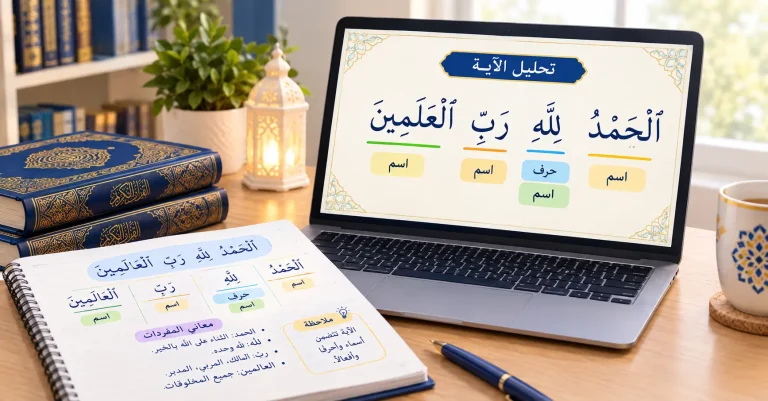
Nahw explains why a word’s ending changes with its role. The word الكِتَابُ appears in الكِتَابُ جَدِيدٌ (the book is new), but in قَرَأْتُ الكِتَابَ (I read the book) the ending changes, and it changes again after a preposition in فِي الكِتَابِ (in the book). Learning these endings is called i‘rab.

Why Grammar Helps When You Can Already Read

Many learners can read Arabic but still feel stuck on meaning. Reading shows you the letters, while grammar shows you how the words relate to each other. With grammar, a sentence becomes something you can analyse rather than guess, and new vocabulary gets easier to learn because words fall into patterns.

What You Will Study

  • Sentence types: nominal and verbal sentences, and how nouns and adjectives agree.
  • Cases and endings: the three cases and what triggers each one.
  • Complex structures: kana and its sisters, inna and its sisters, and conditional and relative clauses.
  • Roots and verb forms: the three-letter root and the ten verb patterns.
  • Conjugation: verbs by tense, person and gender.
  • Derived words and plurals: verbal nouns, participles, and sound and broken plurals.

Are You Ready to Join?

The course assumes you can read Arabic letters, but it does not assume any grammar. Here is how to check where you stand:

  • You can read Arabic, even slowly: you are ready to book a free trial.
  • You cannot read Arabic letters yet and want to learn the language: start with Arabic lessons for beginners.
  • You cannot read Arabic letters yet and want to read the Quran: start with the Noorani Qaida course.

Grammar or Quranic Arabic?

The two courses overlap, but their goals differ. This course teaches Arabic grammar as a system, using Quranic and classical examples among others. The Quranic Arabic course is aimed at understanding the Quran itself. Grammar is a natural step before it, because the rules you learn here are the same rules you meet in the Quran. The same foundations also support Modern Standard Arabic, the formal Arabic of books and news.

How a One-to-One Grammar Lesson Works

In a private lesson, your teacher works only with you. A typical session may revise the last rule, introduce a new one through clear examples, and then give you a few sentences to analyse while the teacher listens and corrects. You can stop and ask whenever something is unclear, and explanations are given in English or Arabic, depending on what helps you most. Because the pace follows you, a rule that needs more time gets more time.

How to Make Grammar Stick

Grammar is learned by using it. After each lesson, say the rule aloud and add an example of your own. Write a few short sentences with the pattern you have just learned, and keep a notebook of verb patterns so you can review them quickly. A little practice most days is more useful than one long session.

Where This Course Fits in Your Arabic Journey

Grammar usually comes after you can read and before the Quran. A common route runs from learn Arabic online, through beginner and adult classes, to grammar, and then to the Quranic course. Adults who want a wider plan can also look at Arabic classes for adults, which includes a grammar track.

Start With a Free Trial

A free trial session lets you meet your teacher, read aloud and talk through your goal before you decide. Book a free trial session for the Arabic grammar course and find out where your grammar journey begins.


Make Arabic Make Sense

Grammar can look like a wall of terms at first: cases, patterns, roots and tables. Taken one block at a time, each piece begins to fall into place.

In live one-to-one lessons, your teacher explains each rule with clear examples, checks your understanding and sets the pace to match yours.

Book a free trial session and see how grammar can make Arabic make sense.