✓ 1-on-1 Live Online Sessions
✓ Male & Female Certified Tutors
✓ 100% Free Trial Included
Need assistance? WhatsApp: +20 123 456 7890
Daad Academy
Modern Standard Arabic Al-Fusha 1-on-1 Live Online

Modern Standard Arabic Course

The Modern Standard Arabic course at Daad Academy teaches formal Arabic, or Al-Fusha: the Arabic of books, news and official writing. Lessons are live and one-to-one with a native Arabic-speaking Al-Azhar graduate teacher, in Arabic and English, and cover reading, writing, listening and speaking. It is designed for learners who can already read Arabic letters. Book a free trial session to meet your teacher first.
Al-Fusha Formal Arabic
1-on-1 Live Online Lessons
4 Skills Read, Write, Listen, Speak
Free Trial Meet the Teacher First
Admissions Open 24/7
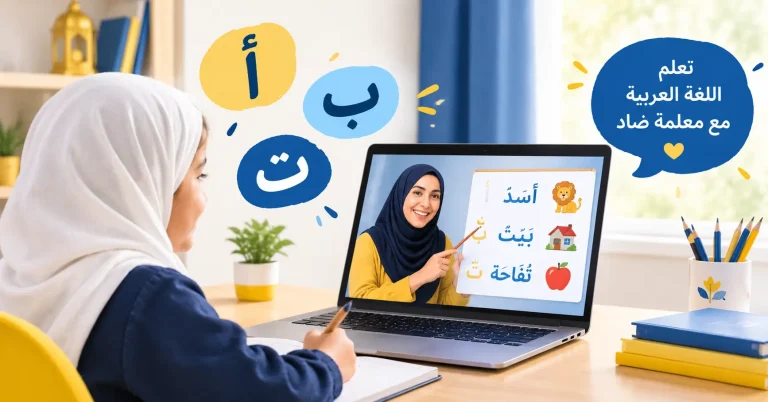
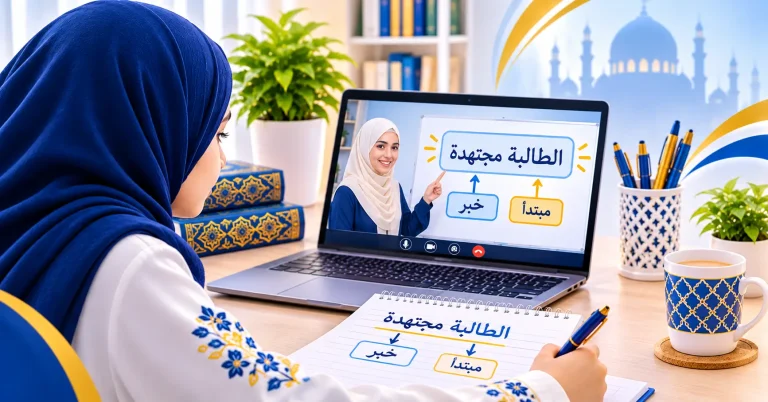
"Modern Standard Arabic course: student learning formal Arabic in a live one-to-one lesson with a Daad Academy teacher"

Ready to start your journey?

Book Your FREE Trial Session

Modern Standard Arabic Course: Course Overview

LevelFor learners who can already read Arabic letters
FormatOne-to-one, live online
Arabic typeModern Standard Arabic (Al-Fusha), formal Arabic
SkillsReading, writing, listening and speaking
TextbookAl-Arabiyya Bayna Yadayk series
Extra practiceDaad Academy vocabulary workbooks
Session length45 to 60 minutes
Teacher StandardQualified native Arabic teachers with formal degrees in language pedagogy or linguistics

Who Studies Modern Standard Arabic

Readers of Arabic News and Books

You want to read newspapers, articles and books in Arabic without constant translation.

Heritage Learners

You hear Arabic at home and want to read and write it properly.

Professionals Working With Arabic Speakers

You need formal Arabic for emails, reports and meetings.

Students and Researchers

You need formal Arabic for study, research or travel to the Arab world.

Formal Arabic, Situation by Situation

UNIT 01

Situation 1: Formal Basics

▼
Greetings, introductions and simple sentences in formal Arabic.
UNIT 02

Situation 2: Reading Short Texts

▼
Notices, short paragraphs and simple texts, read aloud with your teacher.
UNIT 03

Situation 3: Writing Short Messages

▼
Short sentences, notes and simple emails in correct formal Arabic.
UNIT 04

Situation 4: News and Media Arabic

▼
Headlines, short news reports and the vocabulary of the media.
UNIT 05

Situation 5: Formal Letters and Reports

▼
Structured paragraphs, formal letters and the formal register of written Arabic.
UNIT 06

Situation 6: Discussing Ideas

▼
Giving opinions and talking about topics in formal Arabic.

Building Formal Arabic Into Your Week

  • Read one short Arabic headline or paragraph each day
  • Write two or three sentences about your day in formal Arabic
  • Keep a notebook of new words grouped by topic
  • Listen to a short formal Arabic news clip and note the words you recognise
  • Bring one piece of real Arabic text to your lesson

What You Get in Our MSA Lessons

One-to-one lessons: your teacher works only with you and corrects your reading, writing and pronunciation as you go.

Native Arabic-speaking teachers: lessons are taught in Arabic and English by qualified, certified teachers who graduated from Al-Azhar University.

Four skills together: reading, writing, listening and speaking are practised side by side.

A communicative textbook series: lessons follow Al-Arabiyya Bayna Yadayk, with Daad Academy workbooks for extra vocabulary.

A clear way forward: when you are ready, you can continue to Arabic grammar or Quranic Arabic.

A free trial first: meet the teacher and try a real lesson before you decide.

وَمَا أَرْسَلْنَا مِن رَّسُولٍ إِلَّا بِلِسَانِ قَوْمِهِ لِيُبَيِّنَ لَهُمْ
“We never sent a messenger except in the language of his people, to make things clear for them.” (Surah Ibrahim, 14:4)

Language exists to make meaning clear. Learning to read and write formal Arabic is a way to receive that clarity and share it.

How to Begin Your MSA Lessons

1

Book Your Free Trial: Choose a time and meet your teacher in a real one-to-one lesson.

2

Check Your Reading and Goal: Your teacher listens to you read and asks what you want to use formal Arabic for.

3

Start Your First Lessons: Begin at the right place and move forward at a pace that suits you.

What Our Students Say

★★★★★

"I had tried apps, group classes, and YouTube channels for two years. None of them could tell me whether I was constructing sentences correctly or actually developing fluency. Three months into the Modern Standard Arabic Course at Daad Academy — working through Al-Arabiyya Bayna Yadayk with my teacher — I had more usable Arabic than in two years of self-study. The one-on-one format is on another level."

Brother Adam K.Adult student, London, UK
★★★★★

"I am a journalist who covers the Middle East and needed formal Arabic for professional purposes. My teacher at Daad Academy built the course around media and professional vocabulary alongside the standard Al-Arabiyya Bayna Yadayk curriculum. Within six months I could read Arabic news articles directly. The flexible evening scheduling made it possible around my work."

Ms Claire N.Journalist and adult student, Brussels, Belgium
★★★★★

"As a heritage learner whose grandparents spoke Arabic, I had always wanted to reconnect with the language formally. The Daad Academy MSA course gave me the grammar structure and vocabulary that informal exposure never provided. I can now read, write, and hold conversations in formal Arabic, and I have started the Quranic Arabic Course to go even deeper."

Sister Lina H.Heritage learner, Montreal, Canada

Where MSA Can Take You Next

Students who enrolled in this course also advanced their foundational knowledge with these related programs:

Arabic Classes Online Arabic Classes For Kids

Online Arabic Classes For Kids

Online Arabic classes for kids at Daad Academy teach children to read, write and speak Arabic in live one-to-one le...

Ages 5-16 12 Weeks 3
Arabic Classes Arabic Classes For Adults

Arabic Classes For Adults

Arabic classes for adults at Daad Academy are live, one-to-one lessons built around adult life. Choose the goal tha...

Adults 1-on-1 6 Goals
Arabic Classes Arabic Grammar Course

Arabic Grammar Course

The Arabic grammar course at Daad Academy teaches Nahw (how sentences are built) and Sarf (how words are formed) in...

Nahw + Sarf 1-on-1 Madinah Arabic

Modern Standard Arabic Course: Frequently Asked Questions

What is Modern Standard Arabic?−
Modern Standard Arabic, also called Al-Fusha, is the formal standard form of Arabic used in books, news, schools and official writing across the Arab world.
How is MSA different from a spoken dialect?+
Spoken dialects are mainly used in daily conversation and differ from one country or region to another. MSA is the formal form used in writing and formal settings. This course teaches MSA.
Is MSA the language of the Quran?+
The Quran is written in Classical Arabic, and MSA is its modern standard form. They share the same grammar foundations, so MSA helps, but to understand the Quran itself see the Quranic Arabic course.
Do I need to read Arabic before joining?+
Yes, this course assumes you can read Arabic letters. If you cannot yet, start with Arabic Lessons For Beginners to learn the language, or the Noorani Qaida course to read the Quran.
Which book does the course use?+
The course uses the Al-Arabiyya Bayna Yadayk series, with extra vocabulary practice from Daad Academy workbooks.
Is there a free trial?+
Yes. A free trial session is available so you can meet the teacher first.

Modern Standard Arabic Course: Learn the Arabic of Books, News and Formal Writing

The Modern Standard Arabic course at Daad Academy teaches formal Arabic, also called Al-Fusha. Lessons are live and one-to-one, in Arabic and English, with native Arabic-speaking teachers who graduated from Al-Azhar University. This page explains what Modern Standard Arabic is, how it differs from spoken Arabic, what you will practise, and how to tell whether you are ready to start.

What Is Modern Standard Arabic?

Modern Standard Arabic, or MSA, is the formal standard form of Arabic. It is the Arabic of books, newspapers, news broadcasts, schools and official writing, and it is shared across the Arab world. Arabic speakers call it الفصحى (Al-Fusha). When you read an Arabic article or a formal letter, you are reading MSA.

MSA or a Spoken Dialect?

Spoken Arabic differs from one country and region to another, and dialects are used mainly in daily conversation. MSA is the form used in writing and in formal settings. If you want to read, write and follow formal Arabic, MSA is the natural starting point. This course teaches MSA, and your teacher can explain in the free trial how it fits your own goal.

Is MSA the Language of the Quran?

Not exactly. The Quran is written in Classical Arabic, and MSA is the modern standard form that grew from it. The two share the same grammar foundations, so MSA study helps, but they are different goals. If you want to understand the Quran itself, see our Quranic Arabic course.

Where You Will Use Formal Arabic

  • Reading: news, articles, notices and books.
  • Writing: messages, emails, letters and short reports.
  • Study and research: academic texts and formal presentations.
  • Work: communicating with Arabic speakers in a formal, professional way.
  • Family and heritage: reading and writing the language you hear at home.

What You Will Practise

Lessons build four skills together, so none is left behind:

  • Reading: from simple sentences to short articles, read aloud with your teacher.
  • Writing: from short sentences to structured paragraphs and formal messages.
  • Listening: following your teacher’s formal Arabic in clear, steady speech.
  • Speaking: answering questions and discussing simple topics in formal Arabic.

Are You Ready to Join?

The course assumes you can read Arabic letters. Here is how to check where you stand:

  • You can read Arabic, even slowly: you are ready to book a free trial.
  • You cannot read Arabic letters yet and want to learn the language: start with Arabic lessons for beginners.
  • You cannot read Arabic letters yet and want to read the Quran: start with the Noorani Qaida course.

How a One-to-One MSA Lesson Works

In a private lesson, your teacher works only with you. A typical session may revise earlier vocabulary, read a short text together, practise a few sentences aloud, and set a small piece of writing. You can ask questions as they arise, and explanations are given in English or Arabic, depending on what helps you most. Because the pace follows you, a point that needs more time gets more time.

How to Build Formal Arabic Into Your Week

Formal Arabic grows with regular contact. Try to read a short headline or paragraph each day, write a few sentences about your day, and keep a notebook of new words grouped by topic. Bringing a real piece of Arabic text to your lesson, such as an article or an email, shows your teacher what you need and keeps the lessons practical.

Where This Course Fits in Your Arabic Journey

For adults, MSA usually follows beginner study and adult classes. A common route runs from learn Arabic online, through Arabic classes for adults, to formal Arabic, and then to the Arabic grammar course for a deeper look at how the language is built.

Start With a Free Trial

A free trial session lets you meet your teacher, read aloud and talk through your goal before you decide. Book a free trial session for the Modern Standard Arabic course and find out where your formal Arabic begins.


Read, Write and Speak Formal Arabic

Formal Arabic can feel distant, whether you hear Arabic at home or have never heard it at all. Seen step by step, it becomes a language you can read, write and use.

In live one-to-one lessons, your teacher builds your vocabulary, reading and writing together and keeps the pace in line with yours.

Book a free trial session and take your first step in formal Arabic.